
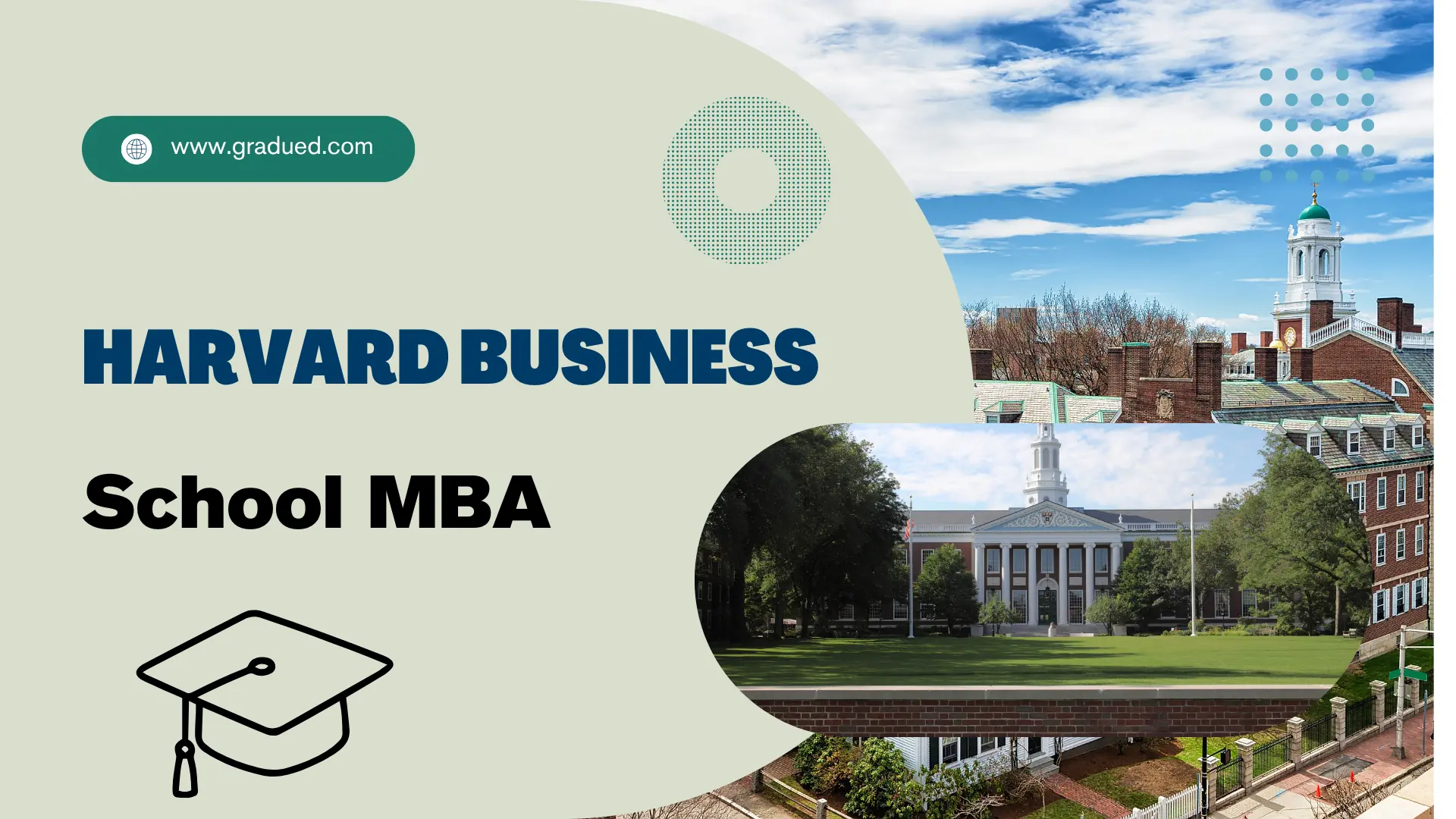
Harvard Business School is globally recognized as a benchmark for excellence in business education. Located in Boston, Massachusetts, the school has shaped generations of leaders across industries, governments, and social enterprises. The Harvard MBA is one of the most selective and respected MBA programs in the world, known for its rigorous case-method pedagogy, diverse global cohort, and powerful alumni network.
This detailed guide covers everything prospective applicants need to know about Harvard Business School, including the Harvard MBA class profile 2027, Harvard MBA acceptance rate, Harvard MBA requirements, Harvard MBA scholarship, Harvard MBA employment report, fees, admissions deadlines, rankings, and reasons to choose HBS.
Table of Contents
About Harvard Business School
Founded in 1908, Harvard Business School is part of Harvard University and consistently sets global standards in management education. The school pioneered the case-method learning approach, where students analyze real-world business challenges and develop decision-making skills under uncertainty.
The two-year, full-time Harvard MBA program emphasizes leadership, analytical thinking, and ethical responsibility. Rather than focusing solely on technical knowledge, HBS prepares students to lead organizations that create long-term value for society.
Harvard MBA Class Profile 2027
The Harvard MBA class profile 2027 reflects HBS’s strong commitment to academic excellence, diversity, and leadership potential.
Key highlights of the Class of 2027 include:
- Total students enrolled: 943
- Total applications received: 9,409
- Women students: 44%
- International students: 37%, representing 62 countries
- Average work experience: Approximately 4.9 years
- Average undergraduate GPA: Around 3.76 (U.S. 4.0 scale)
Students come from a wide range of academic backgrounds, including engineering, economics, business, social sciences, and natural sciences. This diversity enhances classroom discussions and reflects HBS’s belief that leadership can emerge from many disciplines.
The Harvard MBA class profile 2027 also highlights the holistic nature of admissions. Academic performance is important, but professional achievements, leadership experience, and personal values carry significant weight.
Harvard MBA Acceptance Rate
The Harvard MBA acceptance rate is among the lowest of any business school globally. With more than 9,400 applications competing for fewer than 1,000 seats, the estimated acceptance rate remains below 12%.
This high level of selectivity reflects:
- Global demand for the Harvard MBA
- Limited class size to preserve teaching quality
- Emphasis on leadership potential, not just test scores
Applicants admitted to Harvard Business School typically demonstrate a strong academic foundation, meaningful work experience, leadership impact, and clarity of purpose.
Harvard MBA Requirements
Understanding the Harvard MBA requirements is essential for building a competitive application. While HBS does not publish minimum cutoffs, admitted candidates generally meet the following criteria:
Academic Background
- Bachelor’s degree or equivalent from an accredited institution
- Strong academic performance, often reflected in a high GPA
Standardized Tests
- GMAT, GRE, or Executive Assessment scores accepted
- No minimum score requirement; scores are evaluated in context
Professional Experience
- Most students have 4–6 years of full-time work experience
- Leadership exposure, progression, and impact matter more than job title
Application Components
- Written essays reflecting values, leadership, and goals
- Letters of recommendation
- Resume and academic transcripts
The Harvard MBA requirements emphasize a holistic evaluation, meaning applicants are assessed as complete individuals rather than through a single metric.
Read Also: Study Abroad in the UK: Complete Guide to Costs, Scholarships & Student Life
Admissions Deadlines
For the Harvard College Class of 2031 (applying for fall 2027 entry), deadlines typically follow a consistent annual schedule:
- Restrictive Early Action (REA): November 1, 2026 (Notification: Mid-December 2026).
- Regular Decision (RD): January 1, 2027 (Notification: End of March 2027).
- Application Opens: Common App opens August 1, 2026.
- Financial Aid (FAFSA): Due early 2027 (based on 2026-2027 form).
Applicants targeting scholarships or competitive industries often apply in Round 1. Round 2 remains the most popular and competitive. Deadlines may vary slightly each year, so candidates should plan applications well in advance.
Harvard MBA Fees & Cost of Attendance
Pursuing a Harvard MBA represents a significant financial investment. The estimated total cost of attendance for a single student over two years is approximately $234,000, which includes:
- Tuition and mandatory fees
- Housing and utilities
- Food and personal expenses
- Health insurance and academic materials
While the cost is high, graduates often view it as a long-term investment due to strong career outcomes, leadership opportunities, and lifelong alumni support.
Harvard MBA Scholarship & Financial Aid
The Harvard MBA scholarship system is one of the strongest among elite business schools. Unlike many programs that rely heavily on merit-based aid, Harvard Business School primarily offers need-based financial assistance.
Key highlights include:
- Nearly 50% of students receive financial aid
- Around 10% of students receive full-tuition scholarships
- Average scholarship award is close to $100,000 over two years
The Harvard MBA scholarship approach ensures that admitted students can attend regardless of financial background. Awards are determined based on personal and family financial circumstances, not academic or professional merit alone.
Harvard MBA Employment Report
The Harvard MBA employment report consistently demonstrates strong career outcomes across industries and geographies.
Recent employment trends show:
- Approximately 90% of job-seeking graduates receive job offers within three months of graduation
- Around 84% accept offers within the same period
- Graduates secure roles in consulting, finance, technology, private equity, healthcare, and entrepreneurship
Median compensation remains among the highest globally, reflecting the market value of an HBS education. The Harvard MBA employment report also highlights the school’s strong recruiting relationships and extensive career support resources.
Global Rankings & Reputation
Harvard Business School consistently ranks among the top MBA programs worldwide. While rankings vary by publication, HBS is almost always positioned within the global top tier due to:
- Academic rigor
- Faculty thought leadership
- Employer reputation
- Alumni influence
The Harvard MBA brand carries strong recognition across continents, industries, and career stages.
Why Choose Harvard Business School?
There are many reasons why students from around the world aspire to study at Harvard Business School:
Case-Method Learning
HBS’s signature teaching approach builds real-world problem-solving and leadership judgment.
Powerful Alumni Network
Graduates gain lifelong access to one of the most influential alumni communities in the world.
Career Flexibility
The Harvard MBA opens doors across industries, geographies, and entrepreneurial paths.
Diverse Peer Learning
Students learn as much from classmates as from faculty, reflecting the strength of the Harvard MBA class profile 2027.
Long-Term Value
Despite high costs, the Harvard MBA employment report demonstrates strong post-MBA returns.
Conclusion
Harvard Business School continues to define global standards in management education. With a highly selective admissions process, strong harvard mba employment report, generous harvard mba scholarship support, and a diverse harvard mba class profile 2027, the Harvard MBA remains a top choice for future leaders worldwide.
For candidates seeking academic excellence, leadership development, and long-term career impact, Harvard Business School represents one of the most powerful educational experiences available today
FAQs
What makes Harvard Business School different from other MBA programs?
Harvard Business School is known for its case-method teaching, global reputation, and leadership-focused curriculum that emphasizes real-world decision-making.
How competitive is the Harvard MBA acceptance rate?
The Harvard MBA acceptance rate is below 12%, making it one of the most selective MBA programs globally.
Does Harvard Business School offer MBA scholarships?
Yes, the Harvard MBA scholarship program provides generous need-based aid, with many students receiving substantial funding.
What are the key Harvard MBA requirements?
The Harvard MBA requirements include a bachelor’s degree, standardized test scores, work experience, essays, and recommendations, all reviewed holistically.
What does the Harvard MBA employment report show?
The Harvard MBA employment report indicates that around 90% of job-seeking graduates receive offers within three months of graduation.
How much does it cost to study at Harvard Business School?
The total estimated cost of attendance for the Harvard MBA is approximately $234,000 for two years.
When are Harvard MBA application deadlines?
Recent deadlines include early September for Round 1 and early January for Round 2, with a separate timeline for deferred applicants..